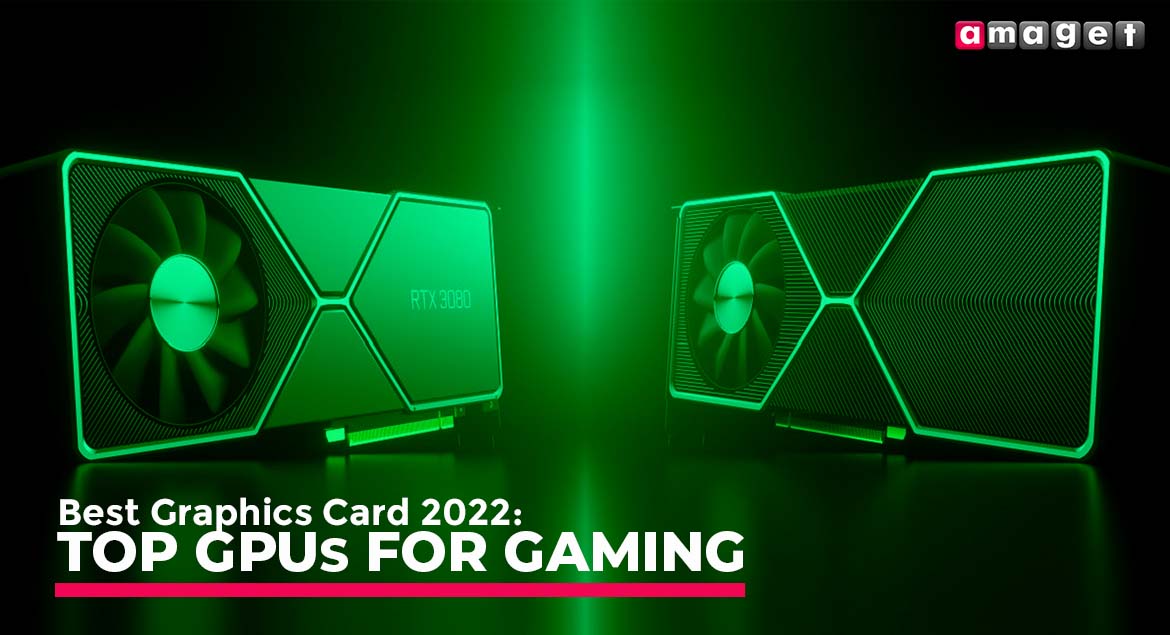
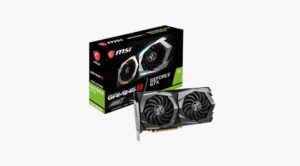
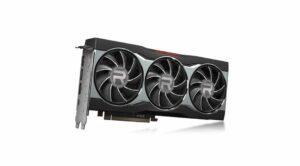
The best graphics card available today will turn your PC into a bona fide gaming machine. Sure, you can run a PC with nothing but integrated graphics, but for real performance — the kind that nets you smooth frame rates in modern games — you need one of our picks for the best graphics card. Something like the NVIDIA GeForce RTX 3080 or the AMD Radeon RX 6800 XT are what we have in mind (if you can find one for a reasonable price). With either of these cards, you’re going to get a premier gaming experience.
The graphics processing unit (GPU) plays an integral role in your gaming PC, helping out the CPU with a heavy load. The better the GPU you buy, the higher resolution and higher in-game settings you’ll be able to enjoy. If you’re wondering exactly where to start, with either a fresh build or an upgrade project, we’ve collected a number of the best graphics cards available now for several different performance thresholds and budget ranges.
Best graphics cards at a glance
- NVIDIA GeForce RTX 3080 — Best overall: Next-gen Ampere, ray tracing, DLSS, power for quality 4K at a reasonable price
- AMD Radeon RX 6800 XT — Runner-up: Next-gen RDNA 2, 16GB VRAM, 300W TDP, competitive price, and performance for 4K gaming
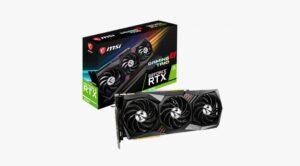
- NVIDIA GeForce RTX 3090 — Expensive overkill: Next-gen Ampere, 24GB VRAM, great for designers and developers
- AMD Radeon RX 6800 — Best mid-range AMD: Next-gen RDNA 2, 16GB VRAM, 250W TDP, performance for 4K and 1440p gaming
- NVIDIA GeForce RTX 3070 — Best mid-range NVIDIA: Next-gen Ampere, RTX 2080 Ti performance
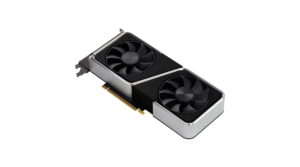
- NVIDIA GeForce RTX 3060 Ti — Best value GPU: Outperforms the RTX 2080 SUPER
- AMD Radeon RX 6700 XT — Raw 1440p power: Sits between the RTX 3060 Ti and RTX 3070 for high-end 1440p gaming
- NVIDIA GeForce GTX 1660 SUPER — Best budget: Affordable price, enough performance for modest 1080p gaming
What is the best graphics card for gaming?
The beauty of building your own PC is that there are plenty of graphics card options available to you based on budget and required performance. You can mix and match hardware as you please and still end up with a powerful rig. For most people, the NVIDIA GeForce RTX 3080 is going to hit a high-end performance tier and not cost an excessive amount of money like the more powerful overkill options, at least when scalping and stock shortages aren’t an issue. Cue the NVIDIA RTX 3090, the Ampere generation’s answer to the RTX Titan, ideal for design and development work but demanding a very high price. The same goes for AMD’s Radeon RX 6900 XT, a high-end card that’s overkill for most people.
If you’re looking to experience 4K PC gaming or just want to absolutely destroy 1440p, the NVIDIA RTX 3080 or AMD RX 6800 XT will work well, delivering only about 10% less performance than the RTX 3090 for a whole lot less money. If you want to just dabble in 4K gaming but primarily focus on a high-end 1440p experience, the NVIDIA RTX 3070 will do good for those on Team Green while the AMD Radeon RX 6800 will be attractive for those on Team Red.
There are plenty more best graphics card options out there, whether you’re looking at one for gaming, 4K power, or to fit a smaller budget. And don’t forget to keep an eye out for where to buy NVIDIA RTX 30-series GPUs and where to buy AMD Radeon RX 6000 GPUs, which haven’t been easy to come by so far. As it stands, here are the best graphics cards on the market today.

1. NVIDIA GeForce RTX 3080: Best graphics card for most gamers
Bottom line: Thanks to powerful Ampere performance and a competitive price, the RTX 3080 is an excellent pick for most people. It affords you the ability to choose FHD, QHD, or UHD resolutions at a high frame rate, and it delivers extra NVIDIA features like RTX ray tracing and Deep Learning Super Sampling (DLSS). It’s much faster than the RTX 2080 and even beats out the RTX 2080 Ti in raw performance.
Memory: 10GB GDDR6X | Memory speed: 19Gbps | Memory bus: 320-bit | Boost clock: 1,815MHz | CUDA cores: 8,704 | Process: 8nm | Power: 340W
Pros
- High-end Ampere performance with 8,704 CUDA cores
- AI enhancements from DLSS 2.0
- Compatible with G-Sync displays
- Powerful enough for 4K gaming
- Outperforms the RTX 2080 and RTX 2080 Ti
Cons
- Overkill for some people
There’s no one true pick for everyone when it comes to the best graphics card, but if we’re choosing what should suit most people based on performance and price, we have to go with NVIDIA’s GeForce RTX 3080. While AMD has undoubtedly cut into NVIDIA’s claim to the GPU throne with its Radeon RX 6000 cards, a few of which are included in this roundup, the top-tier option still belongs to Team Green.
Not only does the RTX 3080 outperform last-generation GPUs, but it also delivers the extra benefits that make RTX cards so sought after. Ray tracing is becoming more prevalent in modern games, and NVIDIA’s GPUs with dedicated ray-tracing cores are up to the task.
DLSS is perhaps the more impressive feature that comes standard with this GPU. It employs dedicated Tensor cores to run AI rendering in real-time, effectively boosting frame rates while also making frames come out at a much higher resolution. Because ray tracing can be detrimental to performance, DLSS is the perfect pairing. AMD’s new RX 6000 cards feature ray tracing, but so far the hit to performance is far more severe compared to NVIDIA RTX.
The RTX 3080 has some beefy specs, and it’s the right card if you’re looking to enjoy smooth 4K gaming at 60 FPS without having to turn down in-game settings. If you want the best PSU for the RTX 3080, NVIDIA recommends at least going with a 750W option. This card is compatible with G-Sync monitors, which have the adaptive sync technology to reduce screen tearing. It will also work with any FreeSync monitors that are “G-Sync compatible.” Whether you’re looking to game at 4K or 1440p, the RTX 3080 is the new best graphics card for many people.

2. AMD Radeon RX 6800 XT: More affordable, similar performance
Bottom line: AMD’s “Big Navi” RX 6800 XT is a bit more affordable than the RTX 3080, yet it trades performance blows and doesn’t suck up as much power. Its 16GB of VRAM are great for futureproofing, and it has a number of included features gamers will love. Just remember that its ray-tracing abilities aren’t as developed.
Memory: 16GB GDDR6 | Memory bandwidth: Up to 512Gbps | Memory bus: 256-bit | Base clock: 2,015MHz | Boost clock: 2,250MHz | Stream processors: 4,608 | Process: 7nm | Power: 300W
Pros
- 16GB of VRAM
- Power-efficient
- Performance comparable to RTX 3080
- Rage Mode and Smart Access Memory
- More affordable than RTX 3080
Cons
- Very expensive
- Not a whole lot better than the RTX 3080 for gaming performance
- Physically enormousAMD’s “Big Navi” Radeon RX 6000 GPUs based on RDNA 2 technology bring a ton of power that puts them among the top options out there. In particular, the RX 6800 XT will generally perform as well as the RTX 3080 in 1440p and 4K games, with each card moving up and down based on other factors. The RX 6800 XT is more power-efficient, sitting somewhere between the RTX 3070 and RTX 3080.It has some impressive raw specs, including a whopping 16GB of VRAM that will set it up nicely for the future. If you’re buying a new GPU today and want it to last for the next five years, 8GB of RAM doesn’t look so impressive.
One big advancement with these GPUs is the addition of ray tracing, previously something only NVIDIA could offer. Your games are going to look prettier, but you’re going to see a more significant hit to performance on the AMD cards. Chalk it up to having more time to develop on NVIDIA’s part.
AMD does have something called Smart Access Memory (SAM) that can boost performance in some games. The gains aren’t huge, but they are noticeable in plenty of titles. We benchmarked Smart Access Memory to see how much of a difference it really makes. NVIDIA has since opened up Resizable BAR Support for its own GPUs, essentially making this point null.
Want to overclock and not void your warranty? AMD’s Rage Mode is another nice addition that will get the job done without harming your hardware. And finally, AMD has now introduced FidelityFX Super Resolution (FSR) to its GPUs new and old. This is a rebuttal to NVIDIA’s DLSS, and for the most part, it works quite well despite using a different approach. The list of compatible games is growing, but it will take some time to catch up to NVIDIA. If you’re on Team Red and want a GPU that can handle 1440p and 4K gaming, the RX 6800 XT is undeniably a great option that should cost less than the RTX 3080 once stock and prices settle.

YOU CAN ALSO READ: The Best Intel Core i5 laptops 2022
3. NVIDIA GeForce RTX 3090: Most powerful, most expensive
Bottom line: The RTX 3090 is a physically large GPU, stacking 24GB of GDDR6X VRAM to help handle design and development work. It’ll deliver about 10% better performance than the RTX 3080 for 4K gaming, but it also costs more than double the price. This is a card best cut out for professionals or those with money to burn.
Memory: 24GB GDDR6X | Memory speed: 19.5Gbps | Memory bus: 384-bit | Boost clock: 1,785MHz | CUDA cores: 10,496 | Process: 8nm | Power: 370W
Pros
- Absolutely enormous specs
- Can game at 8K in certain circumstances
- Crushes 4K gaming
- Excellent for professional design and dev work
Cons
- Very expensive
- Not a whole lot better than the RTX 3080 for gaming performance
- Physically enormousNVIDIA’s RTX 3090 is a huge card both physically and on paper. It has a whopping 24GB of GDDR6X VRAM and 10,496 CUDA cores, but don’t assume that translates to raw gaming power. If you’re interested in 4K gaming, you’ll likely see only about a 10% increase in performance over the RTX 3080. Our comparison of the NVIDIA RTX 3080 vs. RTX 3090 has more information on that front. And don’t even think about buying this GPU for 1440p or 1080p; it’s just not worth the money.Considering it’s more than double the price of most RTX 3080 cards, this is going to be a piece of hardware reserved for professionals and those with big budgets. Yes, this is the card to kill the expensive RTX Titan, and developers and designers will be very interested.
If you are going all-out for one of these cards, be sure it fits into your case and be sure you have a big enough PSU to handle power demands

4. AMD Radeon RX 6800: Excellent mid-range performance
Bottom line: The RX 6800 is a direct competitor to the RTX 3070, and in fact, it will perform better with 4K and 1440p gaming. It costs a bit more and doesn’t offer as-developed ray-tracing or upscaling abilities, but the price-to-performance ratio is excellent.
Memory: 16GB GDDR6 | Memory bandwidth: Up to 512Gbps | Memory bus: 256-bit | Base clock: 1,815MHz | Boost clock: 2,105MHz | Stream processors: 3,840 | Process: 7nm | Power: 250W
Pros
- Better raw performance than RTX 3070
- 16GB of VRAM for the future
- Rage Mode and Smart Access Memory
- Handles 4K and 1440p
Cons
- Costs more than the RTX 3070
- Less-developed ray tracing and FSR
- Slightly higher power draw than RTX 3070The Radeon RX 6800 (minus the XT) is another of AMD’s flagship RDNA 2 GPUs. It has many of the same features as the beefier RX 6800 XT — including ray tracing, FSR, and Smart Access Memory — but it costs less and is more power-efficient (250W compared to the RX 6800 XT’s 300W). It’s still going to handle 4K and 1440p gaming, and its 16GB of VRAM sets up better for the future than the comparable RTX 3070. There are plenty of third-party versions available, but the best AMD Radeon RX 6800 graphics cards will deliver a similar experience.
On that note, you can expect better overall performance from the RX 6800, though at a higher power draw than the RTX 3070. It also cost a bit more money in a world without crazy inflated prices and nonexistent stock. Ray tracing is available with the RX 6800, though it’s not going to compare to what NVIDIA’s RTX cards can do. And, of course, NVIDIA offers DLSS tech that is clearly becoming a huge boon. AMD now has an answer with FSR, but it still has a way to go to catch up with NVIDIA. If you want to go with a more raw performance at 1440p and 4K and don’t mind paying a bit more compared to the RTX 3070, the RX 6800 should make a fine choice for your gaming PC.
5. NVIDIA GeForce RTX 3070: Excellent mid-range performance
Bottom line: The NVIDIA RTX 3070 is the best mid-range GPU you can buy right now if you can find it for sale. It rivals the RTX 2080 Ti in terms of performance, yet it costs far less money.
Memory: 8GB GDDR6 | Memory bus: 256-bit | Base clock: 1.50GHz | Boost clock: 1.73GHz | CUDA cores: 5,888 | Process: 8nm | Power: 220W
Pros
- RTX 2080 Ti performance for far less
- Easily handles 1440p
- Will run 4K
- Ray tracing and DLSS
- Great for those on a budget
Cons
- Just 8GB of VRAM
- Less raw performance than RX 6800
With the GeForce RTX 3070, NVIDIA has managed to deliver performance nearly on par with the RTX 2080 Ti, except this time the card costs around $500 when not being scalped. That’s a huge achievement, and anyone who aims for the mid-range PC market should be happy. A year ago, before NVIDIA’s other 30-series GPUs and AMD’s RX 6000 cards, the RTX 3070 would have broken the internet. There are 5,888 CUDA cores packed into the RTX 3070, more than double that of the RTX 2070 SUPER. It also benefits from RTX enhancements like ray tracing and DLSS AI, boosting frame rates significantly in compatible games. It is, however, still using 8GB of VRAM. If that’s an issue for you, check out AMD’s Radeon RX 6800 with 16GB of VRAM and a similar cost.
In any case, if you can get your hands on this card, your 1440p gaming experience will take off. The RTX 3070 can handle 4K, but you’ll see much better results with a QHD monitor.
YOU CAN ALSO READ: The Best Intel Core i3 laptop: HP, Lenovo and Dell
6. NVIDIA GeForce RTX 3060 Ti: Best value
Bottom line: The RTX 3060 Ti includes all the benefits of RTX cards, and it costs the least money out of all the Ampere cards. It bests the RTX 2080 SUPER, making it capable of crushing 1440p and handling some 4K gaming. This is the best value in gaming today if you can find one.
Memory: 8GB GDDR6 | Memory bandwidth: 448Gbps | Memory bus: 256-bit | Base clock: 1,410MHz | Boost clock: 1,670MHz | CUDA cores: 4,864 | Process: 8nm | Power: 200W
Pros
- Ampere card with the best price to performance
- Beats the RTX 2080 SUPER
- Capable of high-end 1440p gaming
- DLSS and ray tracing
Cons
- Almost impossible to find
- Not as future proof as more expensive options
Budget PC builders are going to want to pay close attention to the RTX 3060 Ti, a GPU priced at about $400 under normal circumstances. Despite the bargain price, it bests the RTX 2080 SUPER in terms of raw performance for 1080p and 1440p gaming. That’s mighty impressive, and it’s likely going to be extremely popular for anyone who’s not too interested in 4K gaming. It also compares well to the more expensive RX 6700 XT. Our comparison of the NVIDIA RTX 3060 Ti vs. AMD RX 6700 XT has more information.
Despite it coming later than the other RTX 30-series cards, you’re still getting capable ray tracing and DLSS technology. All this at a 200W TDP should be ideal for those who don’t want to upgrade the PSU to an older PC.
This card isn’t going to be as future proof as to the heavy hitters in this list, but if you can find one and want to keep your wallet from catching fire, it should make a great choice.
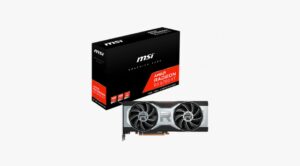
7. AMD Radeon RX 6700 XT: Performance on a budget
Bottom line: AMD’s Radeon RX 6700 XT is a price performer with a listing of about $480. It costs more than the RTX 3060 Ti, but it also delivers better raw power. This is especially important for those who want to push QHD frame rates and don’t care as much about ray tracing or image upscaling.
Memory: 12GB GDDR6 | Memory bandwidth: 384Gbps | Memory bus: 192-bit | Base clock: 2,321MHz | Boost clock: 2,581MHz | Stream processors: 2,560 | Process: 7nm | Power: 230W

-
Pros
- Stellar 1440p (QHD) performance
- 16GB of VRAM
- Capable of ray tracing
- Costs less than other RDNA 2 cards
Cons
- Costs more than RTX 3060 Ti
- Ray tracing and FSR support are not as good
The AMD Radeon RX 6700 XT slots in somewhere between the NVIDIA RTX 3060 Ti and NVIDIA RTX 3070 in terms of raw performance. It also costs about $80 more than the list price of the 3060 Ti, so you have to be sure you’re looking for better power and not a better feature set. If you want to push high frame rates at 1440p and even want to dabble a bit at 4K, the RX 6700 XT will do a great job.
While the RX 6700 XT offers ray tracing, its support isn’t as good as NVIDIA’s, and you will likely see a harder hit to performance. This is true even though AMD’s cards now have FSR, an alternative to DLSS. Bottom line? The 12GB of VRAM sets the RX 6700 XT up nicely for the future, and FidelityFX Super Resolution is beginning to cut into NVIDIA’s DLSS technology. If you can find an RX 6700 XT close to retail price, it should make a great card for QHD gaming.

8. NVIDIA GeForce GTX 1660 SUPER: Affordable 1080p gaming
Bottom line: Any custom PC builders looking to create something budget-friendly should love the NVIDIA GTX 1660 SUPER. It delivers a smooth 1080p performance and doesn’t have an unreasonable price.
Memory: 6GB GDDR6 | Memory bandwidth: 336Gbps | Memory bus: 192-bit | Boost clock: 1,830MHz | CUDA cores: 1,408 | Process: 12nm | Power: 125W
Pros
- Attractive price
- NVIDIA Turing architecture
- G-Sync technology
- Enough performance for smooth 1080p
Cons
- Not intended for 1440p
- No DLSS
Not everyone sees a need to game at a higher resolution than 1080p. Displays are more affordable, and fewer pixels generally allows for a much higher frame rate. If you’re not looking to overspend on a GPU, NVIDIA’s GTX 1660 SUPER should make a great pick. It’s not an RTX card, so it doesn’t offer dedicated ray-tracing cores, though a driver update does allow it to technically be compatible. DLSS 2.0 is not supported. It’s still based on Turing architecture which makes it relatively power efficient.
It has 6GB of GDDR6 VRAM (the base GTX 1660 uses GDDR5) and rather high memory bandwidth at 336GB/s, allowing it to edge out even the 8GB version of the AMD RX 5500 XT in terms of raw performance. You’re going to see elevated, smooth frame rates at 1080p with pretty much any game, even at high settings.
Do note that rumours of an RTX 3050 desktop release are picking up, and many are expecting to see the new budget GPU land in early 2022. It’s unlikely that it will be the solution to any stock shortages, but if you can hold out for a while it might be worth it to see how much budget performance it brings compared to the GTX 1660 SUPER.

Samsung Galaxy S21 Ultra 5G (Phantom Black, 12GB, 128GB Storage)
Samsung Galaxy S21 5G (Phantom Black, 8GB, 256GB Storage)
Weebill S gimbal
Apple iPhone 14 Pro 128GB
HP 1000 Wired Mouse (4QM14AA)
Apple iPhone XS 64GB, London Used
Harman Kardon Aura Studio 3 Bluetooth Speaker
Sandisk 32GB OTG Dual USB Flash Drive 2.0
SMART KEYBOARD CASE FOR IPAD PRO 12.9
CANON EOS 1200D UK USED
Samsung Note 9 (4GB RAM, 64GB Storage) Uk Used